

TRAVEL JOURNAL
STORIES, TIPS & INSPIRATION
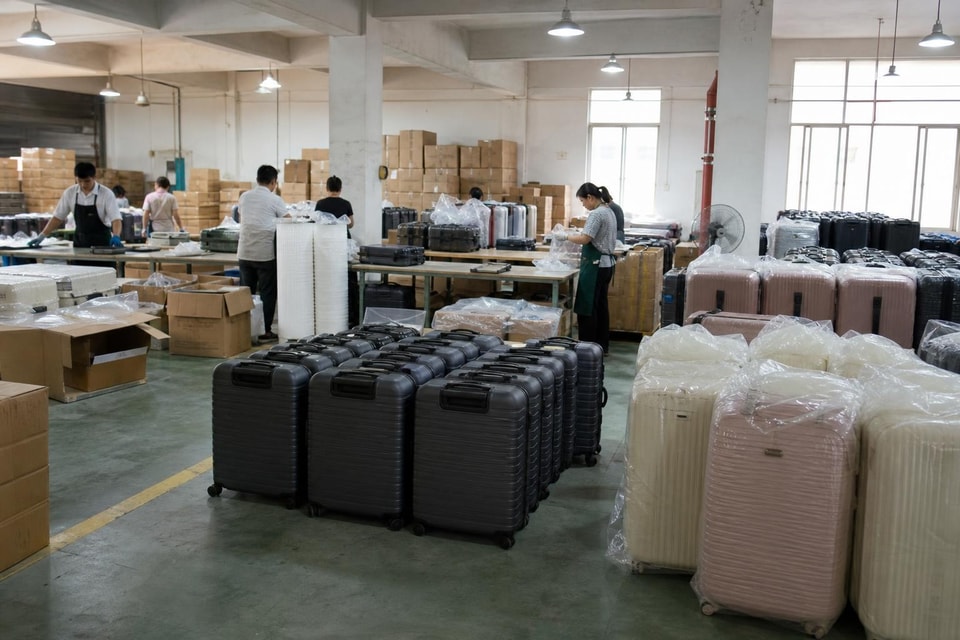
What EU PPWR Means for Luggage Export Packaging: A Practical Readiness Guide
As Regulation (EU) 2025/40 begins to apply generally from 12 August 2026, packaging is becoming a more visible part of product compliance for brands, importers and manufacturers serving the European market. For the luggage industry, the regulation is relevant not only to retail cartons, but also to the way suitcases, business bags and travel products are packed, documented and prepared for cross-border distribution.This practical guide translates the main direction of the EU Packaging and Packaging Waste Regulation (PPWR) into actions that luggage buyers and supply-chain teams can start reviewing now.Why PPWR matters to luggage businessesA suitcase may be designed for years of travel, but the packaging around it is usually used once. PPWR addresses packaging across its life cycle and aims to reduce unnecessary material, improve recyclability and limit substances of concern. It covers packaging placed on the EU market, including sales, grouped and transport packaging.For luggage exporters, this brings packaging specifications into the same early-stage conversation as shell material, wheels, handles, lining, testing and carton drop performance. A compliant product packed in an unsuitable carton can still create avoidable risk at import, retail or e-commerce fulfilment.Five packaging priorities for luggage exports1. Control substances across the complete packaging unitPPWR maintains a combined concentration limit of 100 mg/kg for lead, cadmium, mercury and hexavalent chromium in packaging or packaging components, subject to limited exemptions. The review should therefore cover more than corrugated board: printing inks, adhesives, labels, tape and other components also need to be considered.For recycled cartons, buyers should define supplier documentation and testing requirements rather than relying only on a generic recycled-content statement. Water-based inks and adhesives can support a simpler specification, but each material still needs evidence appropriate to the intended market.2. Design cartons for material recyclingPPWR moves the market toward packaging that can be collected, sorted and recycled at scale. For ordinary luggage cartons, a practical starting point is a predominantly paper-based construction with limited composite elements. Plastic film lamination, hard-to-remove labels and unnecessary plastic-paper combinations can interfere with established paper recycling streams.Where moisture resistance is needed, packaging engineers should compare recyclable water-based barrier options with conventional plastic lamination and confirm performance with the packaging supplier.3. Reduce unnecessary volume without reducing protectionFrom 2030, grouped, transport and e-commerce packaging filled by economic operators is generally expected to stay within a maximum 50% empty-space ratio, subject to the regulation's definitions and exemptions. For luggage, this does not mean removing essential protection. It means selecting a carton that fits the product, planning corner and surface protection efficiently, and avoiding oversized boxes filled with excessive cushioning.Different products need different solutions. A hardshell spinner such as the YWD-2142 or YWD-2136 needs protection against scuffing and concentrated impact, while a softside carry-on such as the YWD-2171 may allow a more space-efficient pack-out. Business backpacks and briefcases can also require a different carton architecture from rigid checked luggage. Packaging should therefore be developed by product family, not copied from one universal box.4. Build documentation into the order processImporters and brand owners should establish a packaging file that can be maintained alongside the product specification. Depending on the operator's role and the applicable requirement, useful records may include:a packaging bill of materials covering board, ink, adhesive, tape, labels and protective inserts;supplier declarations and relevant test reports;carton dimensions, product dimensions and an empty-space calculation;design-for-recycling evidence;market-specific extended producer responsibility registration information; andthe applicable declaration of conformity and technical documentation.This approach makes packaging decisions traceable and helps reduce last-minute changes before shipment.5. Prepare for phased recyclability and labelling rulesPPWR is not a single deadline. The regulation applies generally from 12 August 2026, while major recyclability, minimisation and labelling provisions phase in later. From 2030, packaging is expected to meet design-for-recycling performance grades, with further recycled-at-scale criteria and tighter performance requirements following in subsequent years.Businesses should use the transition period to standardise material codes, artwork approval, packaging data and supplier declarations. Country-level EPR obligations also remain important and should be checked for every EU market where packaged goods are made available.How YAWANGDA approaches export packaging developmentFor RedVoyage/YAWANGDA product programmes, packaging should be treated as part of the product development workflow rather than a final purchasing detail. Our portfolio ranges from hardshell carry-ons and XL checked luggage to softside cases, business backpacks and briefcases. Each format has different protection, volume and handling requirements.When developing an OEM or ODM programme, buyers can include carton material, print method, component list, pack-out layout and required evidence in the project specification. Aligning these items before mass production supports more consistent packing, inspection and export preparation.A practical buyer checklistMap every packaging component, including inserts, tape and labels.Request substance and material evidence from packaging suppliers.Avoid unnecessary plastic-paper composites and difficult-to-separate components.Match carton dimensions and protection to each luggage family.Record product volume, carton volume and cushioning assumptions.Confirm documentation responsibilities with the EU importer or brand owner.Review EPR and labelling obligations for each destination country.Recheck the official PPWR text and subsequent delegated or implementing acts before final approval.Planning aheadPPWR turns packaging into a measurable design and compliance subject. For luggage brands, the most effective response is not simply to use less material; it is to use the right materials, in the right structure, with the right evidence. Starting the review at product-development stage can help protect goods in transit while supporting recyclability, documentation and efficient use of space.Regulatory note: This article is a general industry overview, not legal advice. Final obligations depend on the packaging format, operator role, market and the detailed application of Regulation (EU) 2025/40. Businesses should consult the official EU text and qualified compliance advisers.Sources: European Union, Regulation (EU) 2025/40, Official Journal of the European Union (official primary legal source); EUR-Lex summary “Packaging and packaging waste (from 2026)” (official EU summary). The shared WeChat article was used as an industry-practice reference and cross-checked against the official regulation.

2026 EU PFAS Controls: A Practical Guide for Chinese Luggage Brands
Chinese luggage brands exporting to the European Union need a precise view of PFAS regulation in 2026. The key point is that some specific PFAS are already restricted, while the proposed broad restriction covering the PFAS family is still moving through the European Chemicals Agency and European Commission process. As of 11 August 2026, it would be inaccurate to describe that broad proposal as a fully effective new EU-wide ban with settled scope and dates.The European Commission says ECHA is assessing the universal restriction proposal. After the scientific assessment, the Commission intends to advance a restriction aimed at minimizing PFAS emissions. The final scope, derogations, conditions and transition periods remain to be decided.Existing controls versus the proposed broad restrictionRegulatory layerStatus at 11 August 2026Business meaningRestrictions on specified PFASExisting EU measures already control named PFAS and related substances in defined uses.Check the exact substance, article, use and applicable date.Proposed broad PFAS restrictionECHA assessment and EU decision-making are ongoing.Do not represent the proposal as a finalized blanket ban. Monitor official texts and prepare substitution evidence.This distinction matters in contracts, customer declarations and marketing. “PFAS-free” is a broad claim that requires a defined scope, test approach and supplier evidence.Where PFAS can appear in luggageWater- or oil-repellent coatings on woven textiles, nonwovens, labels or trims.Zipper and fabric finishes introduced by mills or subcontract finishers.Printing inks and surface treatments used for logos, patterns or protection.Adhesives and processing aids in laminates, reinforcements and decorative parts.Lubricants used on zippers, trolley systems, molds or manufacturing equipment.Packaging and accessories when covered by buyer specifications or separate requirements.Presence cannot be inferred reliably from appearance. “Water-resistant,” “fluorine-free” and “PFAS-free” are not interchangeable unless specifications explain what was excluded and how it was verified.Build evidence from the BOM upwardThe bill of materials should identify each textile, coating, zipper, ink, adhesive, lubricant and outsourced process. Suppliers should provide declarations tied to product codes and revisions. Where available and appropriate, CAS numbers help track identified substances, but teams should not assume every proprietary mixture can be managed through one CAS entry.Connect declarations to purchase orders, lots and change-control records. Require suppliers to notify the brand before changing chemistry, sub-suppliers, production sites or finishing routes.Use testing as verification, not as the whole systemTesting can confirm selected risks, screen total or extractable fluorine, or target named compounds, depending on method and purpose. No single test automatically proves absence of every PFAS in every component. Define the question first: an existing legal restriction, a buyer specification, an unknown finish or an alternative treatment.A risk-based plan may prioritize coated textiles, zipper tapes, printed panels and materials from suppliers with limited chemical visibility. Keep method details, detection capability, sampling logic and reports. Do not convert a laboratory reporting limit into a fictional legal limit.Strengthen contracts and supplier declarationsPurchase agreements should define the applicable market and requirements, list controlled specifications, require accurate declarations, provide audit and testing rights, and set procedures for unauthorized changes. Responsibility for investigation, replacement, recall support and documentation should be allocated.Validate alternatives before switchingReplacing a fluorinated finish can change water repellency, abrasion behavior, color, hand feel, seam performance, adhesion and cleanability. Validation should reflect the product’s actual promise and cover performance after flexing, abrasion and aging.Substitution can affect cost and lead time through new minimum orders, sampling, laboratory work, production trials and supplier qualification. Plan these effects into the launch calendar.A controlled action plan for EU exportsSeparate current substance-specific obligations from the proposed broad restriction.Map PFAS-relevant components and processes in the complete BOM.Collect product-specific supplier declarations and available CAS-level information.Apply change control and contract clauses to upstream chemistry.Use targeted and screening tests according to documented risk.Qualify alternatives for performance, manufacturing stability and aging.Track ECHA and Commission publications and update decisions when final legal text appears.This article is general product-compliance information and not legal advice. Companies should obtain advice for their products, substances, uses and placing-on-the-market dates. To review a luggage specification or substitution project, contact RedVoyage/YAWANGDA.Sources & verificationEuropean Commission: PFAS pollution — official EU overview.European Commission, 29 January 2026 — official update describing ECHA’s ongoing assessment.European Commission, 15 June 2026 — official policy update on next steps.

2026 Luggage Industry Trends: What Product Teams Should Prioritize
In 2026, useful luggage innovation is less about adding visible features and more about improving the complete ownership experience. Buyers still notice color, silhouette and price, but product teams are increasingly judged on weight, rolling comfort, repair options, component transparency and whether a case fits the habits of a particular market.1. Lighter structures without fragile constructionLower empty weight gives travelers more usable packing capacity within an airline allowance. Yet reducing grams indiscriminately can create weak corners, unstable trolley systems or panels that deform under load. The practical approach is weight engineering: map where material carries load, where impact is likely, and where thickness or reinforcement can be reduced safely.For hard luggage, teams are comparing shell geometry, rib placement, polymer formulation and localized reinforcement rather than relying only on nominal shell thickness. A credible lightweight claim should be supported by finished-product weight tolerances and validation such as handle cycling, wheel endurance, drop, tumble and zipper tests.2. Repairability becomes a design inputWheels, trolley handles, carry handles, locks and selected zipper components are common wear points. If these parts can be removed with ordinary tools, identified accurately and supplied after sale, a damaged component does not automatically end the life of the suitcase.Good repair design needs stable interfaces, part codes, version control, repair instructions and an agreed spare-parts period. Fasteners should be accessible without destroying the lining, while replacement work must not compromise shell strength.3. Modular components need controlled compatibilityA shared platform may accept different wheel assemblies, internal organizers, handles or trim packages. Useful modularity depends on documented interfaces, dimensional tolerances and load requirements.Mechanical compatibility: hole patterns, clearances and fastener torque are defined.Material compatibility: adjacent plastics, coatings and adhesives are checked for aging.Service compatibility: part labels distinguish revisions that look similar but do not interchange.Commercial compatibility: spare modules remain available in realistic quantities.4. Traceability reaches below the finished productBrands increasingly need to connect a finished-case batch to its shell or fabric, wheel, trolley, zipper, coating, ink, adhesive and assembly records. A practical system starts with a controlled bill of materials and supplier identifiers. Changes require approval, and production lots should link to inspection and test records.5. Market-specific design replaces the universal suitcaseRail-heavy travel rewards compact dimensions, stable standing and easy lifting. Long-haul family travel may prioritize capacity and internal separation. Business travelers often value quiet movement, restrained appearance and fast access, while customers using rough pavements need larger, durable wheels.Product teams should translate these differences into measurable requirements: target external dimensions, packed weight, wheel diameter, handle height, divider layout and test severity.6. Quiet wheels become an engineering requirementWheel noise is a system outcome involving tread material, hardness, bearing quality, axle alignment, wheel diameter, housing rigidity and the surface under the bag. Useful specifications define test surfaces, loading, speed, distance and an acceptable benchmark. Endurance matters too: a wheel that is quiet only when new does not solve the ownership problem.7. Interior organization becomes simpler and more purposefulOrganization is shifting away from numerous small pockets toward adaptable zones. Compression panels, removable pouches, washable laundry storage and clear separation between clean clothing, footwear and technical items can improve real use. Every divider adds material, labor and weight, so each feature should answer a packing task.A practical 2026 development checklistSet finished weight, dimensions and durability targets together.Identify likely wear parts and define replacement procedures before tooling approval.Freeze modular interfaces and control revisions through the BOM.Map materials and chemical declarations to suppliers and production lots.Validate wheels for noise, rolling resistance and endurance.Test packing layouts against the intended trip and market.Verify airline-related claims against current carrier rules.These trends point toward luggage that is easier to carry, maintain, verify and use. Brands planning a new platform can contact RedVoyage/YAWANGDA to discuss a development brief.Sources & verificationIATA Passenger Baggage Rules is an authoritative air-transport industry reference and confirms that baggage allowances remain airline specific.European Commission: PFAS pollution is an official EU policy source relevant to material traceability. Product trends in this article are design analysis, not claims of a single global standard.
YAWANGDA · OEM / ODM
Start a luggage project
Share your product idea, target market or sourcing requirements. We will respond with practical development options.